Printable embroidery stitch guides, often available as free PDFs, offer a convenient way to learn and reference techniques. These resources showcase various stitches, aiding beginners and experienced crafters alike.
Numerous online sources provide downloadable PDF samplers and comprehensive manuals, like the “A-Z of Embroidery Stitches,” facilitating skill development and project inspiration.
What is Embroidery?
Embroidery is the ancient art of decorating fabric or other materials with needle and thread or yarn. It’s a wonderfully accessible craft, transforming simple textiles into beautiful, textured artworks. Historically, embroidery served functional purposes – mending, strengthening fabric – but quickly evolved into a highly valued decorative art form.
Today, embroidery experiences a significant resurgence in popularity, fueled by its creative potential and mindful nature. Resources like printable embroidery stitch guides, readily available as PDF downloads, democratize this art. These guides break down complex techniques into manageable steps, making embroidery approachable for beginners.
From simple stitches to elaborate designs, embroidery allows for endless personalization and artistic expression. The craft’s appeal lies in its versatility and the tangible satisfaction of creating something beautiful with your own hands.
Why Use Printable Stitch Guides?
Printable stitch guides, particularly those in PDF format, offer unparalleled convenience for embroidery enthusiasts. They provide a readily accessible, portable reference for various stitches, eliminating the need for bulky books. Many are free to download, making them an economical resource for beginners and seasoned stitchers alike.
These guides often include clear diagrams and step-by-step instructions, simplifying the learning process. Having a physical copy allows for easy annotation and customization, tailoring the guide to individual needs. Resources like the Métis Youth Embroidery Guide combine stitch instruction with cultural context.
Furthermore, printable PDFs enable adjustments to print scale for accuracy and organization through binding, creating a personalized embroidery companion;

Basic Embroidery Stitches for Beginners
Printable PDF guides frequently begin with foundational stitches like straight, back, split, and satin stitches. These are essential building blocks for any embroidery project.
Straight Stitch
The straight stitch is arguably the most fundamental embroidery stitch, and printable PDF guides invariably feature it prominently. It’s a simple, versatile technique involving bringing the needle up and down through the fabric, creating a dashed line.
PDF tutorials often demonstrate its use for outlining shapes, adding details, or creating textured fills when worked closely together. Many beginner guides include a quick video alongside step-by-step diagrams for clarity. The Stitching Raccoon Sampler, a free PDF, utilizes this stitch extensively.
Variations in length and spacing allow for diverse effects. Mastering the straight stitch is crucial, as it forms the basis for more complex techniques and is a cornerstone of hand embroidery.
Back Stitch
The back stitch, frequently detailed in printable embroidery stitch PDF guides, is a strong, solid line stitch ideal for outlining and lettering. It’s created by stitching forward and then backward to meet the previous stitch, resulting in a continuous, unbroken line.
PDF resources often highlight its durability and suitability for defining shapes. It’s a step up from the straight stitch in complexity, yet remains accessible to beginners. Many free samplers, like those available online, incorporate the back stitch for clear definition.
Its robustness makes it perfect for areas needing reinforcement or for creating detailed, precise designs. Mastering this stitch unlocks a new level of control in your embroidery work.
Split Stitch
The split stitch, commonly illustrated in printable embroidery stitch PDF guides, creates a textured line resembling a twisted rope. It’s formed by bringing the needle up through the fabric and then down through the center of the previous stitch, effectively “splitting” it.
PDF tutorials emphasize its versatility for outlining and filling narrow areas. It offers a unique visual effect, distinct from the solid line of the back stitch. Many free resources demonstrate how varying thread thickness impacts the texture.
This stitch is excellent for creating delicate details and adding subtle dimension to your embroidery projects. It’s a valuable addition to any embroiderer’s repertoire.
Satin Stitch
The satin stitch, frequently detailed in printable embroidery stitch PDF guides, is a filling stitch known for its smooth, lustrous appearance. It involves closely spaced straight stitches running parallel to each other, covering the desired area completely.
PDF resources highlight the importance of consistent stitch length and tension for achieving a flawless finish. It’s ideal for filling small to medium-sized shapes, like flower petals or leaves. Many guides demonstrate techniques to prevent puckering.
Mastering the satin stitch elevates embroidery projects, adding a polished and refined aesthetic. It’s a fundamental technique for creating realistic and visually appealing designs.
Intermediate Embroidery Stitches
Printable embroidery stitch PDFs unlock more complex techniques like French knots and chain stitch, building upon basics. These guides offer detailed diagrams for enhanced skill.
French Knot
French knots, while appearing intricate, become manageable with clear printable embroidery stitch guides. PDF resources demonstrate the technique – wrapping the thread around the needle multiple times before gently pulling it through the fabric.
These guides often include visual step-by-step instructions, crucial for mastering the tension needed to create a neat, rounded knot. Beginners frequently find printable diagrams invaluable for understanding the initial loop and securing the knot correctly.
Practice is key, and having a readily available PDF allows for repeated reference without constantly searching online. Successfully executing French knots adds beautiful texture and dimension to embroidery projects, elevating designs beyond basic stitches.
Chain Stitch
The chain stitch, a foundational element in embroidery, is easily learned using printable stitch guides in PDF format. These guides visually break down the process: bringing the needle up, looping the thread, and re-inserting the needle into the previous loop to form a chain-like line.
Printable diagrams clearly illustrate maintaining consistent loop size for a uniform appearance. Many PDF tutorials offer variations, like whipped chain stitch, adding texture and visual interest.
Having a printable reference allows for quick review during projects, ensuring proper technique. The chain stitch is versatile, used for outlining, filling shapes, and creating decorative borders, making it a staple for any embroiderer’s skillset.
Lazy Daisy Stitch
The Lazy Daisy Stitch, resembling a petal, is beautifully demonstrated in printable embroidery stitch guides available as PDF downloads. These guides typically show how to create the stitch by making a loop with the thread and securing it with a small tacking stitch.
Printable diagrams clearly illustrate the angle and spacing for creating individual petals or connected floral motifs. Many PDF resources showcase variations, such as detached Lazy Daisy stitches for scattered floral designs.
A printable guide is invaluable for mastering consistent petal shapes and secure anchoring. This stitch is perfect for adding delicate floral details to embroidered projects, enhancing their aesthetic appeal.
Stem Stitch
Stem Stitch, a foundational technique in embroidery, is wonderfully detailed in printable stitch guides, often found as easily downloadable PDF files. These guides illustrate how to create a slightly twisted line, perfect for outlining shapes and creating stems – hence the name!
Printable diagrams clearly show the consistent under-over motion of the needle, ensuring a smooth, even line. Many PDF resources demonstrate variations in thread thickness to achieve different visual effects.
A printable guide is essential for maintaining consistent stitch length and direction. Mastering this stitch unlocks a world of possibilities for defining shapes and adding elegant details to your embroidery projects.

Advanced Embroidery Stitches
Printable PDF guides unlock complex techniques like Feather, Herringbone, and Rosette stitches. These resources provide detailed diagrams for intricate designs and textures.
Feather Stitch
Feather Stitch, a versatile and decorative technique, is beautifully illustrated in many printable embroidery stitch PDF guides. These PDF resources demonstrate how to create flowing, leaf-like patterns along curved or straight lines, adding elegant borders to projects.
Printable guides often break down the stitch into simple, step-by-step diagrams, showing the consistent looping motion essential for achieving a uniform feather effect. Learning from a PDF allows for pausing and re-examining each stage, crucial for mastering this slightly more complex stitch.
Variations, such as the detached Feather Stitch, are also frequently included, expanding creative possibilities. These printable resources empower embroiderers to confidently incorporate this beautiful stitch into their work, enhancing designs with graceful detail.
Herringbone Stitch
The Herringbone Stitch, a classic and textured line stitch, is frequently detailed in printable embroidery stitch PDF guides. These PDF resources visually explain how to create the distinctive V-shaped pattern, resembling the skeleton of a herring fish, offering a robust and visually appealing line.
Printable guides often showcase both regular and reversed Herringbone Stitch variations, demonstrating how to alter the direction of the ‘V’s for different aesthetic effects. The clarity of PDF diagrams is invaluable for understanding the consistent stitch length and angle required.
These printable resources empower embroiderers to utilize this stitch for outlining shapes, creating borders, or even filling small areas with a unique texture, enhancing the depth and visual interest of their projects.
Eyelet Stitch
Printable embroidery stitch PDF guides frequently feature the Eyelet Stitch, a decorative and functional technique creating a raised, buttonhole-like effect. These PDF resources provide step-by-step diagrams illustrating how to form the looped structure, essential for achieving a neat and consistent finish.
Printable instructions often detail variations, such as clustered or spaced eyelets, allowing for creative design possibilities. The clarity of these PDF visuals is crucial for mastering the precise wrapping and securing of the thread.
Embroiderers utilize this stitch to create decorative holes, reinforce edges, or add textural elements to their work, guided by the detailed instructions found within these readily available PDF guides.
Rosette Stitch
Printable embroidery stitch PDF guides often showcase the elegant Rosette Stitch, a beautiful, floral-inspired technique. These PDF resources provide clear diagrams detailing the circular wrapping process, crucial for forming the petal-like structure of the rosette.
Printable instructions frequently illustrate different rosette variations – open, closed, or multi-layered – enabling diverse design applications. The visual clarity within these PDF guides is vital for understanding the thread direction and tension needed for a well-defined rosette.
Embroiderers employ this stitch to create floral motifs, embellish garments, or add decorative accents, all guided by the detailed instructions found in these accessible PDF resources.

Finding and Utilizing Printable PDF Guides
Printable embroidery stitch PDFs are readily available online, both free and paid. Utilize search terms like “embroidery stitch guide PDF” to discover resources and tutorials.
Sources for Free Printable Embroidery Stitch Guides
Numerous online platforms offer free printable embroidery stitch guides in PDF format. Websites dedicated to crafting, like those featuring the “Stitching Raccoon Sampler,” frequently provide downloadable patterns and stitch references.
Search engines are invaluable; utilizing keywords such as “free embroidery stitch PDF” yields a wealth of results, including beginner-friendly guides and comprehensive stitch collections. Many embroidery blogs and online tutorial sites also host downloadable resources.
Don’t overlook online libraries; platforms like Z-Library host digitized embroidery manuals, such as “A-Z of Embroidery Stitches,” available for free download as PDFs. Additionally, Métis Youth developed an embroidery guide with a beginner stitch tutorial, accessible online. Exploring these avenues unlocks a treasure trove of free learning materials.
Paid vs. Free PDF Stitch Guides
Free printable embroidery stitch guides, while abundant, often offer a limited selection of stitches or basic instructions. They’re excellent for beginners exploring fundamental techniques and building confidence. However, the quality and detail can vary significantly.
Paid PDF stitch guides, conversely, typically provide a more comprehensive and meticulously curated experience. These often include detailed diagrams, step-by-step photographs, and advanced stitch variations. They may also feature project ideas and troubleshooting tips.
The choice depends on your skill level and needs. Beginners might benefit from free resources, while experienced embroiderers seeking in-depth knowledge may prefer the investment in a premium guide. Consider the value offered – detailed instructions and expanded stitch libraries often justify the cost.
Understanding Stitch Diagrams in PDFs
Embroidery stitch diagrams within PDF guides utilize visual cues to represent stitch formation. Lines indicate needle paths, while numbers often denote the sequence of steps. Understanding these symbols is crucial for accurate execution.
Pay close attention to the starting and ending points of each stitch, as well as the direction of the needle. PDFs frequently employ color-coding to differentiate between thread strands or stitch components. A “picture index” can be invaluable for visual reference.
Practice interpreting diagrams alongside actual stitching. Don’t hesitate to pause and re-examine the illustration if a step is unclear. Many guides include accompanying photographs or videos for enhanced clarity.
Customizing and Printing Stitch Guides
Printable PDF stitch guides can be adjusted for scale and printed on various papers. Choosing the right paper and binding method enhances usability and longevity.
Adjusting Print Scale for Accuracy
Ensuring accurate stitch sizes when printing PDF embroidery guides is crucial for successful projects. Before printing, always check your printer settings and select “Actual Size” or “100% scale” to prevent distortion.
Test prints are highly recommended; print a small section of the guide containing stitch diagrams and compare the printed sizes to a ruler. If discrepancies exist, manually adjust the scaling percentage in your printer settings until the diagrams match the intended dimensions.
Remember that different printers may render scale slightly differently, so calibration is key. Accurate scaling guarantees that your embroidered stitches will correspond to the intended design and maintain the pattern’s proportions, leading to a polished and professional finish.
Choosing the Right Paper for Printing
Selecting appropriate paper significantly impacts the usability of your printable embroidery stitch guides. Standard printer paper (20lb) is suitable for initial practice and reference, but heavier weight options offer enhanced durability.
Cardstock (65-110lb) provides a sturdier base, resisting tearing and allowing for repeated handling during embroidery sessions. Matte photo paper can also be a good choice, offering clarity and a pleasant tactile feel.
Avoid glossy paper, as it can create glare, making stitch diagrams difficult to read. Consider the longevity of your guides; heavier papers withstand frequent use and are ideal for building a lasting embroidery reference library.
Binding or Organizing Printed Guides
Effective organization is crucial for maximizing the utility of your printable embroidery stitch PDF guides. Simple hole-punching and placement into a binder allows for easy addition or removal of pages, creating a customizable reference system.
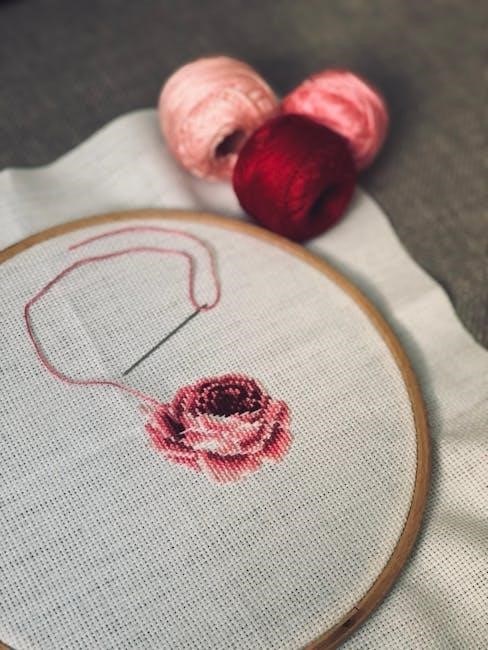
Alternatively, consider using sheet protectors to safeguard against wear and tear, especially with frequently used diagrams. Small, portable folders are ideal for taking guides on the go, perfect for stitching circles or travel.
For a more permanent solution, explore bookbinding techniques or utilize pre-made mini albums. Clearly labeled dividers will further streamline access to specific stitch families or techniques, enhancing your embroidery workflow.
Embroidery Stitch Families & Categorization
Printable stitch guides often categorize stitches into families – filling, line, and decorative – offering a structured learning approach and aiding project design.
Filling Stitches
Filling stitches, as detailed in many printable embroidery stitch guides (available as PDF downloads), are designed to completely cover a defined area with thread, creating solid blocks of color or texture. These are essential for shading leaves, petals, or forming the body of embroidered motifs.
Common examples include the satin stitch, known for its smooth, glossy finish, and variations like long and short stitch, which offer a more textured appearance. Printable guides often demonstrate how to achieve even coverage and prevent puckering. Other filling options are brick stitch and random stitch, offering unique visual effects.
Understanding stitch direction and density, as illustrated in PDF resources, is crucial for achieving professional-looking results. These guides frequently include diagrams showing optimal thread placement for different fabric types and design complexities.
Line Stitches
Line stitches, frequently showcased in printable embroidery stitch guides (often in PDF format), are primarily used to create outlines, define shapes, and add delicate details to embroidery designs. These stitches excel at producing clean, precise lines, essential for lettering, stems, and intricate patterns.
The back stitch and stem stitch are foundational examples, providing excellent control and definition. Printable guides often illustrate how to vary stitch length and direction to achieve different effects. Other options include the split stitch and chain stitch, offering unique textures and visual interest.
PDF resources demonstrate how to maintain consistent tension and spacing for smooth, unbroken lines. Mastering these techniques, as shown in downloadable guides, is key to achieving polished and professional embroidery work.
Decorative Stitches
Decorative stitches, abundantly featured in printable embroidery stitch guides – frequently available as PDF downloads – elevate embroidery beyond basic outlines, introducing texture and visual flair. These stitches are ideal for embellishing designs, creating floral motifs, and adding unique character to projects.
The French knot, lazy daisy stitch, feather stitch, and rosette stitch exemplify this category, offering diverse aesthetic possibilities. PDF guides often provide step-by-step illustrations and variations for each stitch, enabling creative exploration.
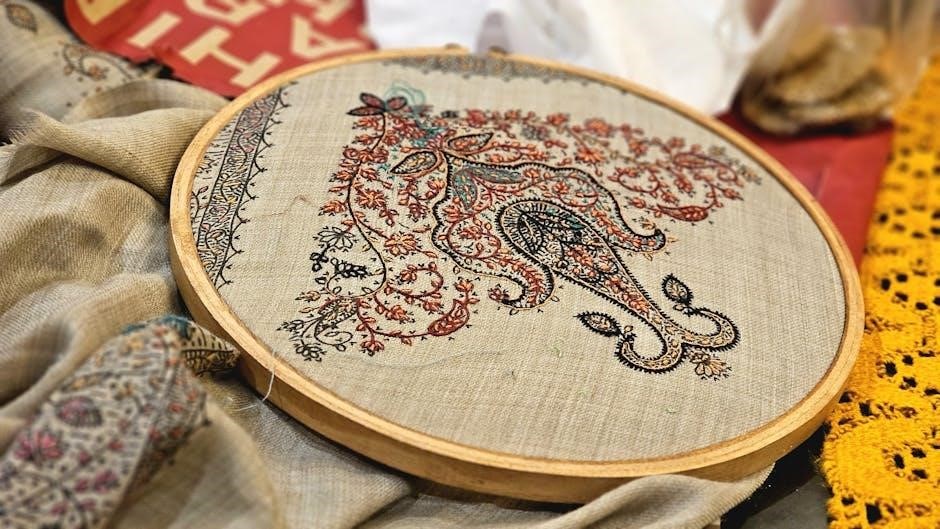
Resources like comprehensive stitch compendiums (containing 200+ stitches) showcase the breadth of options. Mastering these techniques, guided by printable PDFs, allows embroiderers to personalize their work and achieve stunning, intricate results.
Resources for Further Learning
Online tutorials, embroidery books (some in PDF format), and vibrant embroidery communities expand skills beyond printable stitch guides, fostering continuous learning.
Online Embroidery Tutorials
Online embroidery tutorials complement printable stitch guides, offering dynamic visual learning experiences. Many platforms host videos demonstrating each stitch, from basic straight stitches to complex techniques like French knots and the feather stitch.
These tutorials often accompany free PDF samplers, allowing stitchers to practice alongside the instruction. Resources range from quick “how-to” videos for individual stitches to comprehensive courses covering entire projects.
Websites and platforms like YouTube are brimming with content, catering to all skill levels. Utilizing these resources alongside printable guides accelerates learning and unlocks creative potential, enhancing understanding of embroidery stitches and techniques.
Embroidery Books and Manuals (PDF Availability)
Traditional embroidery books and manuals remain valuable resources, and increasingly, many are available as PDF downloads. Titles like “A-Z of Embroidery Stitches” offer comprehensive stitch libraries, often detailing over 200 different techniques with step-by-step illustrations.
These PDF versions provide portability and convenient access to detailed instructions. They frequently categorize stitches into families – filling, line, and decorative – aiding in project planning. Searching online libraries and digital bookstores reveals a wealth of options, both free and paid.
Combining the depth of knowledge found in these manuals with the accessibility of printable stitch guides creates a powerful learning toolkit for any embroiderer.
Embroidery Communities and Forums
Embroidery communities and online forums are invaluable resources for enthusiasts seeking support and inspiration, often sharing links to printable embroidery stitch guides and PDF patterns. These platforms foster collaborative learning, allowing members to exchange tips, troubleshoot challenges, and showcase their projects.
Many forums host dedicated threads for free resources, including downloadable stitch guides and sampler patterns. Experienced embroiderers frequently share their knowledge, offering guidance on technique and customization.
Engaging with these communities provides access to a wealth of collective wisdom, supplementing the information found in books and PDF manuals, and enhancing the overall embroidery experience.